
What Putnam County Property Tax Records Show
Putnam County keeps no single master property file. Ownership, assessment, taxation, mapping, and municipal approvals each live in their own official records. Match the SBL parcel number across those sources, and let the office holding the original roll, bill, or deed settle anything time-sensitive.
| Field | What It Shows | Where |
|---|---|---|
| Assessed value | verified tax and assessment information | official assessment or tax source |
| Market / appraised value | verified tax and assessment information | official assessment or tax source |
| Exemptions | verified tax and assessment information | official assessment or tax source |
| Tax bill & status | verified tax and assessment information | official assessment or tax source |
| Taxing districts | verified tax and assessment information | official assessment or tax source |
Putnam County splits its official records by function. Ownership, assessment, taxation, mapping, and municipal approvals all sit in separate files, and no one lookup covers them. The SBL parcel number is the reliable bridge between sources, while dated facts are best confirmed with the custodial office.
Looking Up a Putnam County Tax Bill
Start with the parcel, not a name. The bill system asks for the SBL parcel number and the tax year you want, and its screen warns that owner-name searches can miss the right parcel. Ownership, assessment, and mapping live in separate official records, so that parcel key is what carries your search between them.
- Follow the official portal and preserve the parcel number and source date for the next record check. by address or parcel]
- Follow the official portal and preserve the parcel number and source date for the next record check.
- Follow the official portal and preserve the parcel number and source date for the next record check.
- Follow the official portal and preserve the parcel number and source date for the next record check.
- Assessed value
- verified tax and assessment information
- Mill rate / levy
- verified tax and assessment information
- Homestead exemption
- verified tax and assessment information
- Tax lien
- verified tax and assessment information
Appealing a Putnam County Assessment
Putnam County keeps ownership, assessment, taxation, mapping, and municipal approvals in separate official records. Match the SBL parcel number across them. Confirm anything time-sensitive with the office that holds the original.
Appeal window. Use the current municipal grievance calendar and file with the local assessor or designated review body before the stated deadline; a late filing may defer review.
Putnam County Assessment and Tax Screens
The Real Property page connects to the assessment rolls. It also posts the county property-search link.
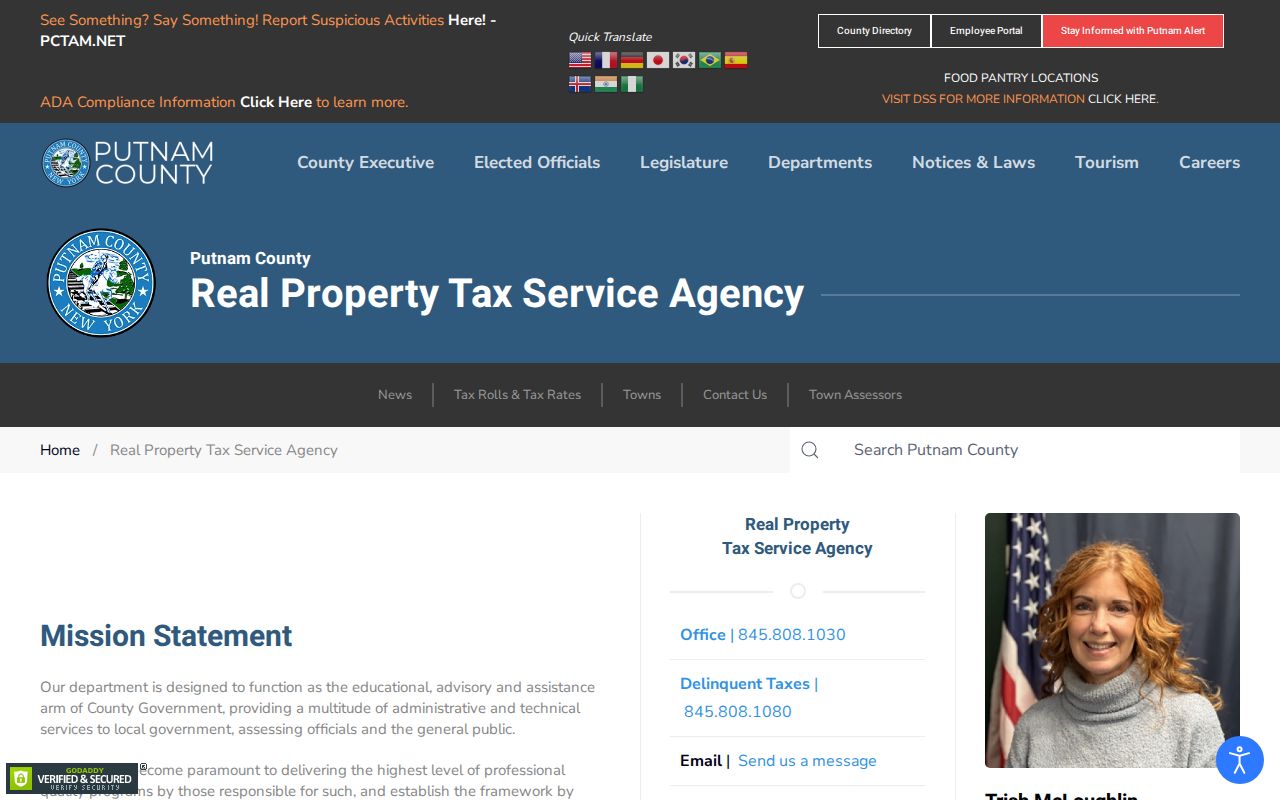
Assessment tools and bill payment sit apart. The official tax lookup expects a parcel ID and a chosen tax year.
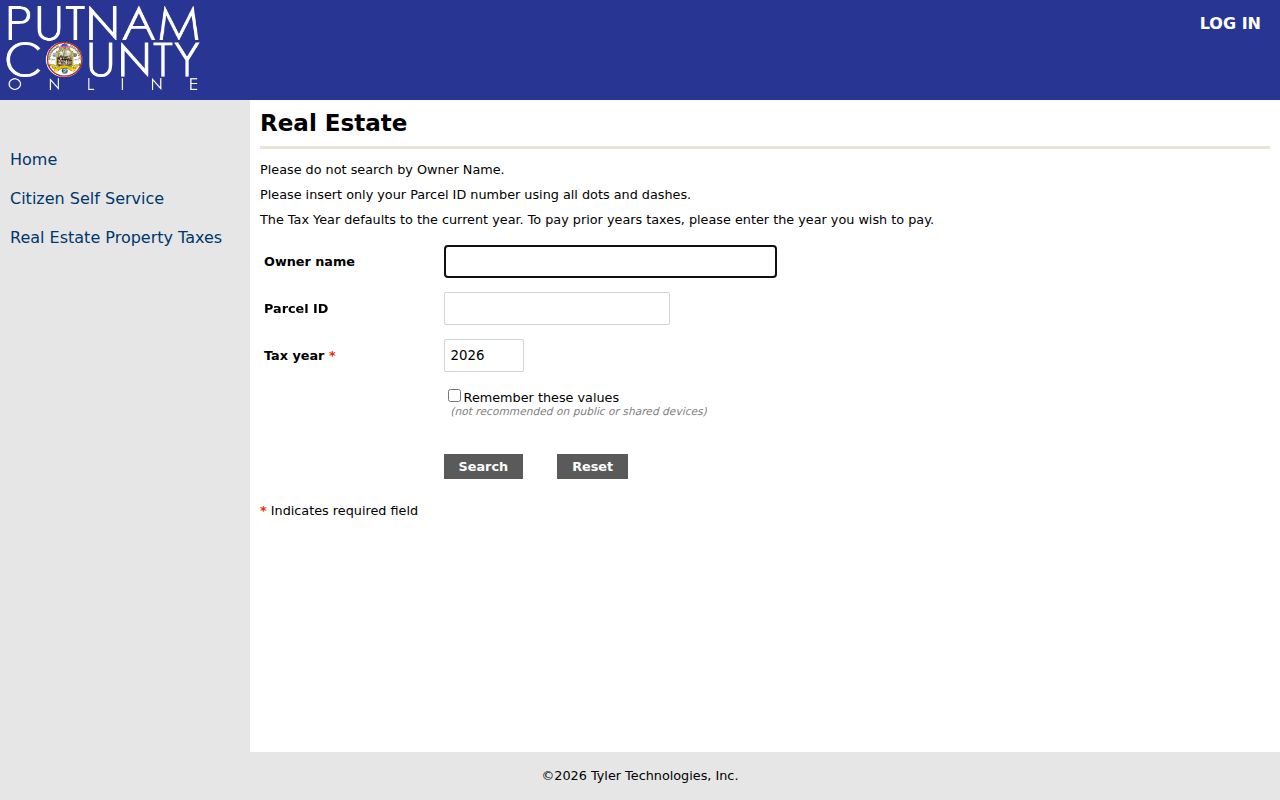
One caution appears on the search screen. It tells users not to depend on an owner-name lookup to find the right tax bill.
Reading Putnam County Tax and Assessment Evidence
Putnam County publishes its assessment and tax rolls each year, broken out by municipality. The assessments themselves come from the town assessors. A single parcel record can show land value, building value, total assessed value, and other value fields side by side. New York adds a wrinkle. Each municipality sets its own level of assessment, and state equalization rates frame the comparison. A raw assessed figure is not a market estimate. The tax-bill lookup wants two things. You enter the formatted parcel ID and pick the tax year you need. The screen itself warns against searching by owner name. Pull the SBL from Beacon or the assessment roll, then carry that identifier into the bill system. The county payment page lets you view and pay a bill, with separate eCheck and card surcharges listed. A convenience charge is not a tax. A current payment screen cannot reconstruct an older assessment either. Exemption codes live on the assessment roll. STAR and similar exemptions change the taxable amount without touching the physical parcel. Eligibility questions go to the local assessor first. Grievance review, the Board of Assessment Review, and Small Claims Assessment Review are distinct steps under New York procedure. Delinquent taxes and county-acquired property belong to Finance. Keep the assessment year, taxable status date, bill year, exemption code, and payment status separate whenever you compare records.
Source Notes for Putnam County Records
Every Putnam County lookup earns its keep. Record the office, portal, search key, record date, and access date. An address is a fine starting point. The SBL is the stronger cross-system key. It follows a parcel from the recorder to the assessor to the tax roll. Names demand care with spelling and entity forms. An index entry points to a source document. But it does not replace the document itself. A parcel map supplies geographic context, not a surveyed boundary line. An assessment reports a value for a stated roll year. It is not a current opinion of sale price. A tax screen reports a bill or payment status for one chosen year. It is not the full title history. These distinctions keep any search of Putnam County property records honest.
When an online result comes back thin, contact the named custodian with a narrow request. Give the municipality, the address, and the SBL. Also give the record class and the date span you need. Ask the County Clerk about recorded instruments such as a deed. Ask Real Property or the town assessor about rolls, assessments, and maps. Finance handles county tax matters, and the relevant village or town office handles permits and zoning. Verify any consequential conclusion against the original record.
Putnam County Assessment Rolls by Municipality and Year
The Real Property Tax Service Agency posts assessment and tax-roll links for each municipality and year. Recent 2025 and 2026 material is included. The county also keeps the tax maps, rolls, and transfer data. Assessments are another matter. Each town assessor sets the local numbers, while the county supplies central access and coordination. Parcel questions start with that local assessor. Write down the details as you go. The roll year, municipality, and SBL matter. So does the property class. So do land and improvement assessments, total assessment, and exemption codes. Keep them straight. Tentative and final rolls, school bills, town and county bills, and village bills cover different stages and periods. Never merge them into one.
Land, Building, Total, and Full-Value Context
Putnam parcel data splits land, building, and total assessed value into separate fields. The number still needs context. New York relies on municipality-specific levels of assessment and state equalization measures. So an assessed figure is no fixed percentage of market value without the right municipal profile and year. A displayed full-value estimate is not a private appraisal. Recorded consideration can reflect an entity change, a fiduciary deed, a family transfer, or another event. That event may never have been an open-market sale. Keep the four figures apart. Assessment, equalized context, taxable value, and deed consideration each answer a different question.
Finding a Putnam County Tax Bill With the SBL
Putnam County's tax-bill portal warns against searching by owner. The search tool wants the parcel ID exactly as formatted, punctuation included. It also wants the tax year you need. The formatted SBL appears on Beacon, on the assessment roll, and on any prior bill. If the entry gets rejected, check the punctuation. Check the leading zeros and the municipality too. Swapping in a person's name will not fix it.
- Confirm the parcel and municipality.
- Copy the SBL exactly.
- Select the bill year.
- Read levies, exemptions, payments, and status separately.
- Contact the collector for an older item.
The county's payment page lists the surcharges separately for eCheck and card payments. A convenience charge sits outside the levy itself, so confirm the current amounts before paying.
STAR and Other Putnam County Exemptions
Exemptions change the taxable amount on a Putnam County bill. They often show up as codes or deductions rather than labels. STAR is one New York program. Others depend on statutory conditions particular to each owner of record. An exemption never affects who holds title. Its absence on a screen proves nothing about whether an application was filed. For the right form, eligibility standard, filing date, and roll-year effect, rely on county guidance. The local assessor can help too. When comparing years, separate three possible causes: a new assessment, a changed exemption, or a shift in the tax rate. They are not the same thing.
Grievance, Board Review, and SCAR Records
Assessment review in New York follows a set order. An owner starts with the local assessor and the municipality's grievance calendar. The Board of Assessment Review then hears timely complaints. Small Claims Assessment Review can provide a later court route for qualifying property. Pull exact deadlines and forms from current municipal and state guidance.
Keep the paper trail whole along the way. The assessment, property description, evidence, filed complaint, proof of delivery, determination, and any later order all matter. A disputed amount may trace to something else entirely, such as an exemption, a payment posting, a parcel mismatch, or a tax-rate question that belongs with another office.
Delinquent Taxes and Putnam County Finance
Local collection and county delinquency are separate stages. Putnam County Finance runs the delinquent-tax process. It posts county-acquired property and tax-foreclosure information, including a 2024 auction listing. A current tax bill is not a foreclosure history. An auction notice alone does not prove title changed hands.
Ask Finance about the specific SBL and the years involved. Then compare foreclosure or acquisition records against County Clerk instruments and the newest tax roll. Keep redemption, judgment, sale, deed, and roll-update dates clearly apart.
Village Taxes Layer Over Town and County Records
Brewster, Cold Spring, and Nelsonville are incorporated villages. Ownership and assessment still run through Putnam County and the relevant town system, though a village may add its own tax records. Postal geography can muddy this structure. Cold Spring and Nelsonville share ZIP 10516, and Brewster mailing addresses reach beyond the village line.
Confirm the legal municipality from the parcel and GIS boundary before assuming a village bill applies. File village, town-and-county, and school documents by year and collector. Permits may explain physical changes, but they never replace the assessment roll.